


Latest records release includes case of Eleanor Rush, a 17-year-old North Carolina girl found dead in her cell after being bound and gagged
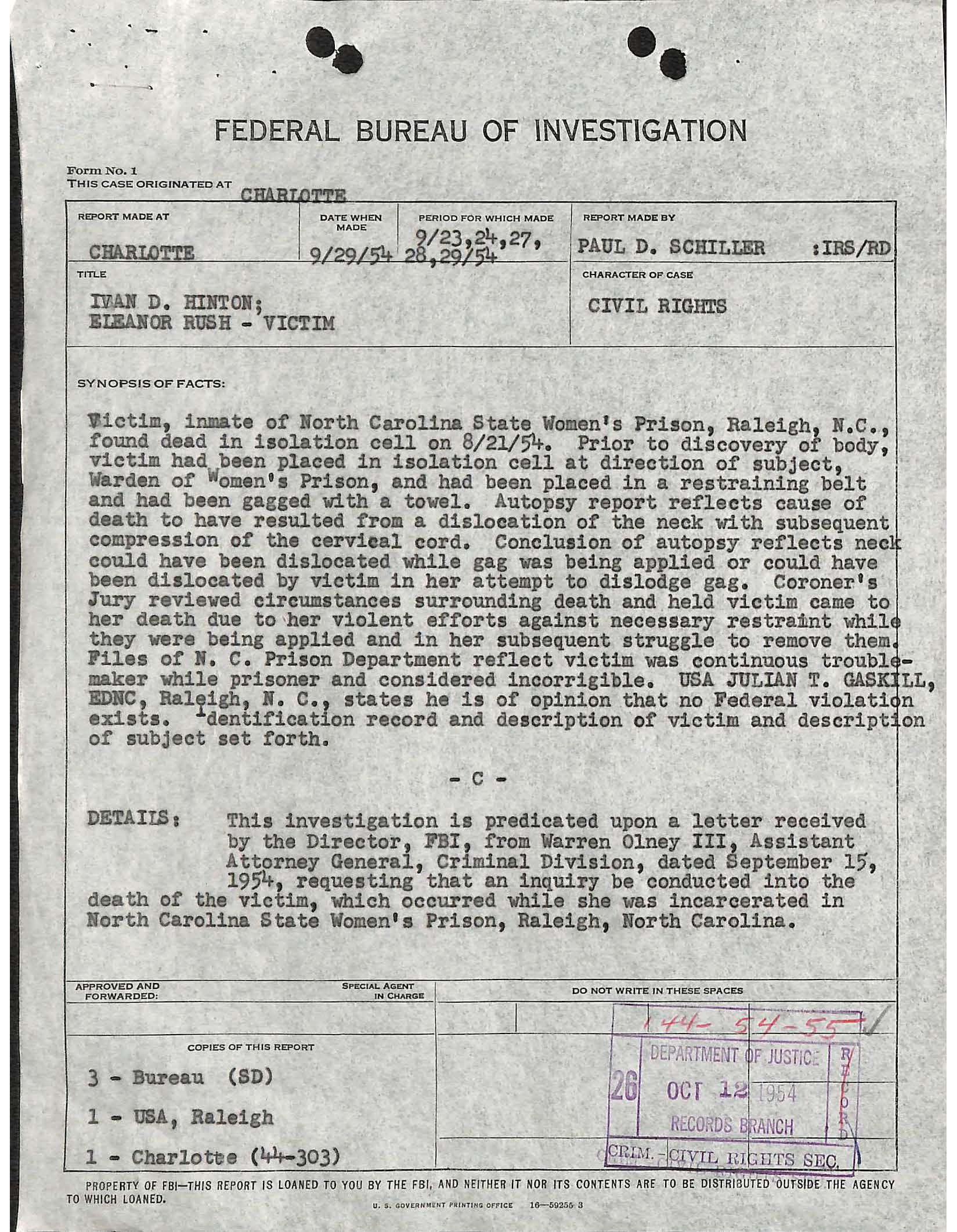
Eleanor Rush was just 17 years old in 1954 when prison officials in North Carolina put her in solitary confinement. On Aug. 20, 1954, after prison officials determined that Rush was being too disruptive alone in her cell, guards restrained her and gagged her with towels, then left. In less than an hour, she was found dead. Official documents recorded her death as an “accident” and a coroner’s inquest jury determined that Rush had died “due to her violent efforts against necessary restraint.”
Rush’s case is one of three released this month by the Civil Rights Cold Cases Records Review Board, the federal independent agency created by Congress with bipartisan support to review and release records concerning civil rights violations that occurred from 1940 through 1979.
As with most of the cases released over the past 15 months by the Civil Rights Cold Cases Records Review Board, Rush’s death was investigated by federal authorities. No charges were ever brought in connection with the Black teenager’s death. An attorney with the Department of Justice wrote, “Facts of this case are just as consistent with innocence as with guilt of a civil rights violation.” The 63-page case file is available unredacted and in its entirety on the Civil Rights Cold Case Records portal, maintained by the National Archives and Research Administration. A summary of the case also appears on the Board’s website, coldcaserecords.gov.
“This is an especially disturbing case,” said Board co-chair Gabrielle Dudley. “Eleanor Rush was just a child, and the federal records show she had already served 57 days in solitary isolation. The circumstances of her confinement, along with the brutal method of restraining her, provides an alarming look at the cruelties suffered by Black women – and even children – incarcerated during the civil rights era.”
Since releasing its first case in October of 2024, the four-member Board – private citizens appointed by the President – has released 40 cases, comprising more than 9,000 pages of documents. The Board anticipates the release of dozens more cases in 2026. The legislation that created the Board requires that it sunset its work no later than next January, 2027. However, legislation that would extend that tenure by four years has passed the U.S. Senate and is currently being considered by the House of Representatives. The release of the records is intended to paint a fuller picture of a fraught time in our nation’s history, while also providing clarity and answers to family members of victims.