


Civil Rights Cold Case Records Review Board authorizes largest records release in its history
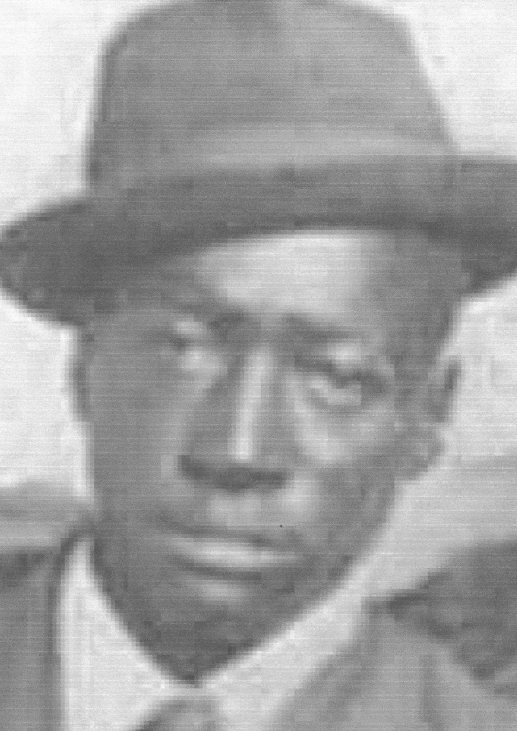
The Civil Rights Cold Case Records Review Board on Thursday announced the largest records release in its history—23,780 pages of federal records related to ten cases of racially motivated violence. Among them are 9,907 pages concerning the 1946 Moore’s Ford Bridge lynchings, in which a mob of unmasked white men shot and killed two Black couples in rural Georgia. The release comes as the Board faces a January 2027 shutdown unless Congress passes legislation that would extend its tenure until 2031.
Of the 23,780 pages included in Thursday’s release, 3,748 pages—in eight of the ten cases—are being withheld in full because they contain federal grand jury information. The Board has written U.S. Attorney General Todd Blanche, requesting that he petition the relevant court to unseal grand jury materials in seven of those cases, including Moore’s Ford Bridge. The requests are being made under a provision of the Civil Rights Cold Case Records Collection Act of 2018.
“Today’s release brings to 76 the number of cases the Board has released in just over two years,” says Board co-chair Gabrielle M. Dudley. “Case by case, these records fill in gaps in the historical record and answer questions that have lingered in victims’ families for generations. Unfortunately, if Congress does not extend our work, hundreds of other cases we’ve identified will likely remain inaccessible to historians, journalists and—most tragically—to families of other victims.”
Under current law, the Board must sunset on Jan. 8, 2027. Bipartisan legislation that would extend the Board’s tenure until 2031 has passed the U.S. Senate but awaits a vote before the full House of Representatives. If Congress adjourns in December without acting on the legislation, the Board’s work will end, with hundreds of unsolved or unresolved civil rights cases still awaiting review.
Among the cases included in today’s release:
Moore’s Ford Bridge lynchings (1946), Walton County, Georgia: On July 25, 1946, a white mob killed two Black couples—George and Mae Murray Dorsey, and Roger and Dorothy Malcom—near Moore’s Ford Bridge. The killings, among the most notorious unsolved lynchings in American history, prompted extensive investigations but resulted in no prosecutions.
The 9,907 pages of federal records include FBI investigative files, including a report that established 58 of the “most likely suspects” to have been involved in the lynching. The release also includes a video recording of the Dec. 7, 1998 FBI and Georgia Bureau of Investigation interview of witness Roy Jackson. These records represent only a portion of the federal government’s holdings concerning the case. The Board is seeking additional responsive records from the Department of Justice (DOJ) and FBI. Unless its tenure is extended, the Board will be unable to review those records or expedite their public release.
Cleo Wright (1942), Sikeston, Missouri: Wright, a 26-year-old Black mill worker, was severely wounded after a police officer shot him. A mob of several hundred white people dragged Wright from jail and through the streets. They tied him to the back of a car and drove him to a Black neighborhood, where they set his body on fire. Neither state nor federal grand juries returned indictments.
Wright’s death, regarded as the first lynching after the United States entered World War II, attracted international attention and was exploited by Axis powers in propaganda portraying American democracy as hypocritical. Scholars regard the case as one of the DOJ’s earliest civil rights investigations, an important early test of federal efforts to prosecute racial violence in the absence of an anti-lynching law.
Claude Otis Johnson (1953), Benoit, Mississippi: Johnson, a 34-year-old Black tenant farmer and father of five, was shot and killed by John Thomas, a white store owner and justice of the peace, following a dispute over an unpaid $37.50 bill. Thomas claimed self-defense, an account disputed by Johnson’s wife and other eyewitnesses. A federal grand jury declined to indict Thomas, and he was subsequently acquitted of murder in state court after less than ten minutes of jury deliberation.
Of the 470 pages of responsive records in Johnson’s case, 270 are being withheld in full and another 61 are partially redacted because of federal grand jury secrecy. Those restrictions limit researchers’ ability to examine how Justice Department attorneys addressed a central legal question: whether Thomas was acting as a private citizen or exercising his authority as a justice of the peace when he killed Johnson.
Board faces January sunset
Created under the Civil Rights Cold Case Records Collection Act of 2018, which was signed into law by President Donald Trump during his first term, the Board is charged with expediting the public release of federal records concerning civil rights violations from 1940 through 1979.
S. 1510, which would extend the Board’s work until 2031, passed the Senate by unanimous consent last December. Its companion bill in the House, H.R. 3087, passed the House Oversight and Government Reform Committee overwhelmingly in May. It awaits consideration by the full House.
The records can be accessed through the National Archives’ Civil Rights Cold Case Records Portal. Case summaries are available at the Board’s website, coldcaserecords.gov.
For media inquiries, please email Steve Fennessy, communications manager for the Civil Rights Cold Case Records Review Board, at steve.fennessy@coldcaserecords.gov.