


Cleo Wright
Cleo Wright was a 26-year-old mill worker who lived in Sikeston, Missouri. He was married to Ardella Wright, who was pregnant with their first child at the time of his death.
Incident
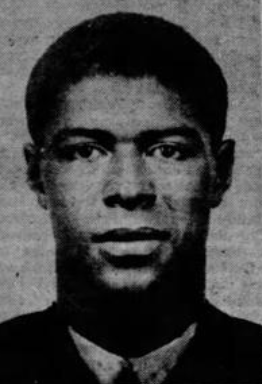
In the early hours of Jan. 25, 1942, Cleo Wright, a 26-year-old Black mill worker, was walking alone along a road in Sikeston, Missouri. Hess Perrigan, a white police officer, passed Wright after leaving the home of Grace Sturgeon, a white woman who had been stabbed in her home by an intruder. According to a FBI report, Sturgeon and her sister-in-law told police that they did not recognize the intruder in the dark house, “but from the tone of his voice and the odor of his body they believed him to be a negro.”
Perrigan had responded to the call and then “went in search” of the perpetrator with Jesse Whitley, a white neighbor of the Sturgeons. Perrigan and Whitley drove past Wright after driving from the Sturgeon home to Sunset Addition, a Black neighborhood in Sikeston, and back. Wright had blood on his clothing and Perrigan accused him of assaulting Sturgeon, though Wright told Perrigan he had been in a fight with two other Black men. Perrigan searched Wright and found “a long bladed knife, which was bloody.” Perrigan arrested Wright and placed him in the car, keeping him at gunpoint in the vehicle while Whitley drove. Perrigan and Whitley later told the FBI that Wright “drew a knife and stabbed Perrigan in the throat.” Perrigan then fired four shots at Wright, who “fell out on to the sidewalk” when the car stopped.
The men drove with Wright to the Dunn Hotel, where they met white police officer Roy Beck. Beck took Wright into custody while Perrigan went to the hospital to seek treatment for his stab wound. Beck transported Wright to the city jail and “was about to place him in a cell” when he “noticed” that Wright was “very sick.” He told the FBI that it was at that point that Whitley told him that Wright had been shot four times. Beck then called an ambulance to take Wright to the Sikeston General Hospital.
Beck told the FBI that while Wright was in the hospital, he “admitted ownership” of the knives and stated that he had “cut” Sturgeon. Dr. E.J. Nienstedt treated Wright in a basement emergency room for eight bullet wounds and set his right arm, which was broken. He did not administer any narcotic for pain because Wright “seemed to be resting,” but said he was “positive” Wright would not recover and would live “for a short time at the most.” Wright was released from the hospital at 4 a.m. and transported home by police officer Grover H. Lewis.
At 6:30 a.m., officers Beck and Lewis went to Wright’s home to “ascertain his condition” and “thought he was dying.” Wright’s wife, Ardella Wright, told the FBI that Wright “did not recognize her” when he was brought home. She and her parents believed he needed more care and security than they could provide, and Wright was transported to the city jail between 8 and 9:30 a.m. The FBI later noted that “a large crowd had congregated” and was “steadily increasing” at the jail when Wright was incarcerated.
Melvin Dace, a white officer with the Missouri State Highway Patrol, told the FBI that when he arrived at the jail at 10:30 there were no Sikeston Police officers on duty. Dace saw “a number of people” entering and exiting the jail while “attempting to force their way” into Wright’s room “with an iron bar.” Dace “ordered the building cleared” and called the mayor, officials on the State Highway Patrol, the sheriff, and the prosecuting attorney and asked them to come to City Hall. Upon his arrival, Prosecuting Attorney David Blanton addressed the mob and told them to disperse and allow the “law to take its course.”
Around noon, just after Blanton’s speech, a mob of several hundred white people abducted Wright, dragging him from the jail by his feet. Members of the mob kicked, beat, and threw Wright as they moved him. They tied him to the back of a car and drove to a schoolhouse in Sunset Addition, where they set his body on fire.
Blanton and police officers followed the crowd to Sunset Addition, later telling the FBI that they “warned all of the colored people to stay inside” and “not to get mixed up with the crowd” headed to the neighborhood. Wright’s remains were left in the neighborhood for most of the afternoon, until a city truck removed him.
Aftermath
Both Sturgeon and the police officer were treated in the hospital and survived their wounds.
Many Black residents fled Sikeston after Wright’s death.
Wright’s killing, regarded as the first lynching to occur after the United States entered World War II, received significant public attention. Japan and other Axis powers distributed propaganda in areas including present-day Indonesia, suggesting that such lynchings were in store for people of color across the world if the Allied powers won the war. In a Feb. 10, 1942 letter from Assistant Attorney General Wendell Berge to Attorney General Francis Biddle, Berge wrote that the lynching of Wright was “of grave national concern” as Japan and other “propogandists” were “presently engaged in efforts to stir up our own population along racial lines.” He continued that there was “ample basis” for the investigation, both of the mob and the police who “made very little real effort” to protect Wright.
Biddle, in his announcement of the FBI investigation on Feb. 13, 1942, stated: “With our country at war to defend our democratic way of life throughout the world a lynching has significance far beyond the community, or even the state, in which it occurs. It becomes a matter of national importance and thus properly the concern of the federal government.”
A NAACP press release on Feb. 13 summarized findings from NAACP investigators in Sikeston and stated that they found “those who might testify against the lynchers would be ostracized,” and so “even the most liberal” white people in Sikeston would not testify against anyone in the Wright case.
A state grand jury and then a federal grand jury did not indict any members of the mob who killed Wright or any law enforcement whose cooperation or incompetence deprived Wright of his right to due process. According to a DOJ press release from July 31, the federal grand jury returned a report describing Cleo Wright’s killing as a “shameful outrage” and “censuring” the Sikeston police for having “failed completely to cope with the situation.” The report continued that “with great reluctance” the jury had determined “the facts disclosed do not constitute any Federal offense.” No one has ever been prosecuted in the killing of Wright.
Following the grand jury’s decision not to indict, the chief of the civil rights section, Victor Rotnem, wrote a public article about the laws discussed during the grand jury proceedings. Speaking to the significance of the legal argument developed for the Wright case, Rotnem outlines the purpose of his article: “No disrespect for the conclusions of the federal grand jury is intended. However, the determination of a grand jury that the facts disclosed do not constitute a federal crime under existing laws is not conclusive.”
Case summaries are compiled using government records and archival primary source material. These include, but are not limited to, investigative records, arrest reports, newspaper articles, court filings, census records, birth and death certificates, transcripts, and press releases. In many cases, the records contain contradictory assertions.
Media Gallery
In addition to the incident files associated with this case, this summary relied on the following:
Archival
- NAACP Records: General Office File; The Anti-Lynching Campaign, 1912-1955; Lynching, Jan 1, 1942-Dec 31, 1942; Library of Congress, Washington, D.C.
- NAACP Legal Defense and Educational Fund Records: Subject File, 1929-1968; Justice Department; Lynching notes and articles, 1933-1947; Library of Congress, Washington, D.C.
Genealogical Records
- Death Certificate for Missouri, United States, Missouri State Board of Health, 1942
- Marriage Records for Scott County, Missouri, 1940
- Population Schedule for Jefferson County, Arkansas, United States Federal Census, 1920, 1930
- Population Schedule for Scott County, Missouri, United States Federal Census, 1940
- World War II Draft Registration Card, Missouri, United States, 1941
News Coverage
- “A Word to The Negroes and The Press,” Charleston Democrat (Charleston, MO), February 12, 1942
- “Adverse Publicity for Sikeston This Week,” Sikeston Herald (Sikeston, MO), January 5, 1942
- “American Legion Post Commends Sergeant Dade,” Sikeston Herald (Sikeston, MO), January 29, 1942
- “Biddle Orders Probe of Missouri Lynching,” Washington Times Herald (Washington, IN), February 13, 1942
- “Cases in Six States, OFF Release Says,” Indianapolis Recorder (Indianapolis, IN), April 4, 1942
- “City Council Adopts Resolution Condemning Recent Mob Action,” Sikeston Herald (Sikeston, MO), February 5, 1942
- “Council Considers Mob Resolution,” Sikeston Herald (Sikeston, MO), February 5, 1942
- “Disgrace to Missouri,” Sikeston Herald (Sikeston, MO), February 5, 1942
- “Expressions from Without,” Sikeston Standard (Sikeston, MO), January 30, 1942
- “FBI Bears Down on Subversives,” Philadelphia Independent (Philadelphia, PA), April 5, 1942
- “FBI Probe is Under U.S. Civil Rights Law,” St Louis American (St. Louis, MO), February 26, 1942
- “Federal Jury to Probe Lynching,” Des Moines Sunday Register (Des Moines, IA), April 12, 1942
- “Federal Men Probe Charge Police Did Not Protect Victim,” The Call (St. Louis, MO), February 28, 1942
- “Grand Jury Lynch Probe is Indicated,” Charleston Democrat (Charleston, MO), February 12, 1942
- “Grand Jury May Be Called,” Sikeston Herald (Sikeston, MO), January 29, 1942
- “Guard Quickly Formed for Sunset Addition,” Sikeston Herald (Sikeston, MO), January 29, 1942
- “Jury’s Lynching Probe Fails to Get True Bill,” Evening Star (Washington, D.C.), March 11, 1942
- “Justice Department Attacks Racial Abuses in 6 States,” Afro-American (Baltimore, MD), April 4, 1942
- “Lions Pass Resolution in Support of Dace,” Sikeston Herald (Sikeston, MO), January 29, 1942
- “Lynch Law,” Enterprise-Courier (Charleston, MO), February 12, 1942
- “Lynched Negro was a Paroled Convict,” Sikeston Herald (Sikeston, MO), January 29, 1942
- “Lynching and the Blanton Clan,” Chicago Sunday Bee (Chicago, IL), February 22, 1942
- “Lynching Negro After Attacks,” Enterprise-Courier (Charleston, MO), January 29, 1942
- “Mob Action 2nd in SEMO in 17 Years,” Sikeston Herald (Sikeston, MO), January 29, 1942
- “Mobsters Observed Traffic Regulations,” Sikeston Herald (Sikeston, MO), January 29, 1942
- “Mrs. Sturgeon May Recover,” Sikeston Herald (Sikeston, MO), January 29, 1942
- “Negro is Lynched by Missouri Crowd,” New York Times, January 26, 1942
- “Negroes Demand Lynching Inquiry,” St. Louis Globe-Democrat (St. Louis, MO), February 2, 1942
- “Negroes to Discuss Lynching with Donnell,” Sikeston Herald (Sikeston, MO), January 29, 1942
- “Officer Perrigan is Released from Hospital," Sikeston Herald (Sikeston, MO), January 29, 1942
- “Progress Reported in Lynching Investigation,” Sikeston Herald (Sikeston, MO), February 5, 1942
- “Sikeston Negro Who Slashed White Woman is Burned,” Charleston Democrat (Charleston, MO), February 12, 1942
- “Statistics on Lynchings in State of Missouri,” Sikeston Herald (Sikeston, MO), January 29, 1942
- “The FBI at Sikeston,” Kansas City Journal (Kansas City, MO), February 14, 1942
- “Trooper Dace Lauded in Report to Chief,” Enterprise-Courier (Charleston, MO), February 12, 1942
- “Urge FDR Bring Sikeston Mob Before Courts,” Louisiana Weekly (New Orleans, LA), February 28, 1942
- “Wanted– Sikeston Mobsters, Reward Money Offered,” Louisiana Weekly (New Orleans, LA), February 28, 1942
- “We Stand to Defend,” Sikeston Herald (Sikeston, MO), January 5, 1942
- “We’re Guilty in Part,” Sikeston Herald (Sikeston, MO), January 29, 1942
- “What Other People and Papers Say About Sikeston’s Lynching,” Sikeston Herald (Sikeston, MO), February 5, 1942
- Lucas Sellem, “Victims of 1942 Lynching Honored Through Sikeston Soil Collection Project,” KFVS, June 23, 2022