


Henry G. Andrews
Henry G. Andrews, the son of Emanuel Andrews and Mary S. Valentine, was a 24-year-old North Carolina native and World War II veteran. He had 10 siblings and worked as a farmer in Warren County, North Carolina before enlisting in the military.
Case summary
Incident
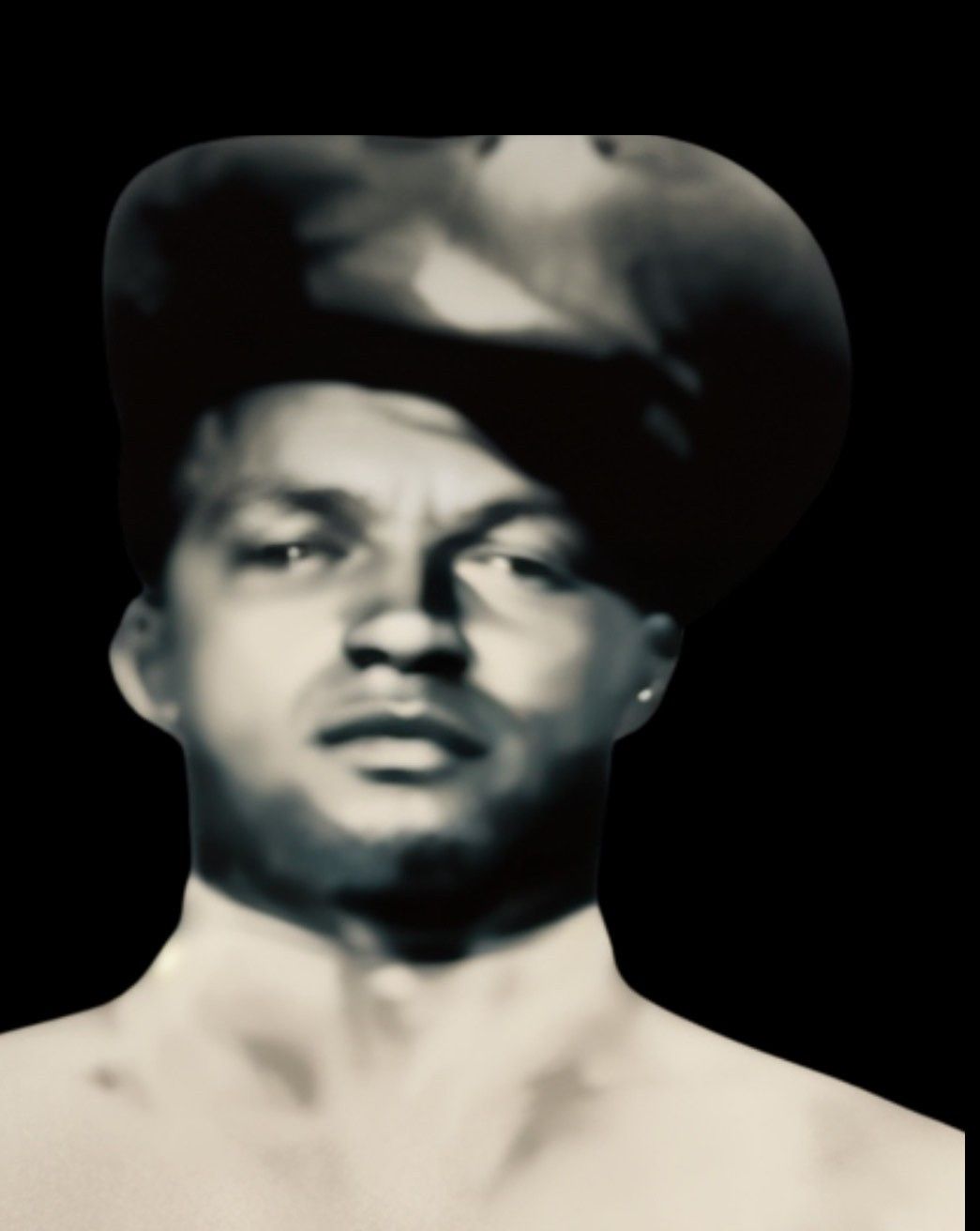
On the afternoon of June 7, 1947, Henry G. Andrews was at D.C. Scott’s general store in Ridgeway, North Carolina. Scott, a white business owner, told Federal Bureau of Investigation (FBI) agents in an Aug. 19 interview that he had deemed Andrews, who was talking loudly and putting his arms around customers, to be drunk and a nuisance and asked him to leave. Scott told agents he asked Andrews’ father, who was also there, to get his son out of the store before calling Warren County Deputy Sheriff Mark P. Bottoms.
On his way to Scott’s store, Bottoms picked up Willie N. Carter, police chief of Norlina in Warren County. Carter was in the process of arresting Isaac Mayo, a Norlina Black man, for alleged drunkenness.
While Carter stayed in the car with Mayo, Bottoms entered the store. Bottoms told FBI agents that Andrews “did not appear to be very drunk” and that he came “peaceably” to the car after his arrest. Bottoms sat Andrews in the car behind Carter and asked him if he had any weapons. Andrews turned over a pocket knife.
National Association for the Advancement of Colored People (NAACP) representatives provided the Department of Justice’s (DOJ) Criminal Division an initial account, which noted that Andrews and Mayo were handcuffed together in the back of the police car. According to the representatives, Andrews attempted to “placate the officers and persuade them to release him” and placed his hand on Carter’s shoulder. When Carter protested, Andrews moved his hand, stating he meant no harm. Then, Carter turned around and shot Andrews three times in the neck. The officers allegedly drove around waiting for Andrews to die before returning to Warrenton, the county seat.
In a June 28 statement to the local Legal Committee of the NAACP, Mayo said that neither he nor Andrews were handcuffed. Mayo stated that he did not remember anything that took place between Andrews and Carter during the car ride because he had dozed off. He was awoken by a gunshot inside the car, which he then tried to exit upon seeing an injured Andrews. Mayo said he didn’t remember anything else after being placed back in the car.
On Aug. 18, Mayo was interviewed by the FBI for the first time. He told agents that Andrews was complaining about his arrest. Mayo also stated he “did not pay too much attention to what was said and dozed off.” But at some point, he noticed Andrews “reaching over the front seat and grabbed at both officers as if trying to push their heads together.”
Mayo’s statement to the FBI weeks after his initial account aligned with the police narrative. Carter, whom the FBI noted was blind in his left eye, told agents that Andrews had asked about making bond, then suddenly struck Carter. Bottoms and Carter both told the FBI that, following the blow, Carter’s head hit the dashboard. According to the officers, Andrews continued hitting them, causing Bottoms to swerve the car into a yard.
Neither Mayo nor Bottoms saw Carter shoot Andrews, according to their statements to the FBI. Carter said the shooting was “happening so fast at the moment that it was difficult to recall the exact sequence of events.” All three recalled seeing Andrews fall back on the rear seat, seemingly unconscious. Mayo stated he was scared, jumped out of the car, and was hit over the head by Bottoms, who told the FBI he hit Mayo with his blackjack, thinking Mayo was attacking him.
The group then drove towards Warrenton, allegedly looking for medical aid for Andrews. Carter and Bottoms arrived at the jail, laid Andrews’ body on the lawn, and took Mayo inside. Dr. G.H. Macon arrived about four minutes later and declared Andrews dead, stating an examination “revealed that the bullet entered the victim’s mouth and did not come out of his body.”
Carter and Bottoms then returned to Scott’s store about an hour after the initial arrest to inform him that Andrews was dead. According to an eyewitness, Andrews’s father wept when he overheard the news.
Aftermath
Warren County Coroner Edward Petar conducted an inquest that evening and told FBI agents that he “made a special effort to secure the most prominent and reliable men of Warrenton to sit on the jury, so that their findings would not be questioned.” Petar did not call Mayo as a witness. However, Carter and Bottoms, whom Petar personally knew, testified. “No evidence was brought out to contradict their testimony,” Petar told the FBI. The jury concluded that Andrews “came to his death from pistol shot in the hands of officer W.N. Carter in line of duty. We further find that the officer shot in self-defense.”
Roy V. Shearin, Warren County sheriff, also conducted an inquiry. Shearin told FBI agents that he questioned Carter, Bottoms and Mayo and that all three told the same stories, which led him to believe Carter and Bottoms were “exonerated.” Shearin also noted “that physically victim was probably capable of overcoming both Carter and Bottoms” and that Carter acted in self-defense. According to T.P. Plummer, a Black eyewitness who was in the store, “the negroes in the community feel that it was not necessary for the officers to kill Andrews in order to take him to jail.”
On July 11, 1947, Thurgood Marshall, the NAACP’s special counsel, wrote to DOJ Assistant Attorney General Theron L. Caudle. According to Marshall, Charles W. Williamson, counsel for the North Carolina State Conference of Branches of the NAACP, had “made a preliminary investigation” into the incident, which included Mayo’s initial statement. Williamson had asked Marshall in a letter from July 7 to broker a meeting with the DOJ because “we know from his [Mayo’s] conversations that he has purposely avoided telling the truth, and we know that we are unable to offer him the necessary protection which he deserves.”
On July 28, Williamson and the Rev. James Burchette met with the DOJ’s Criminal Division to discuss the incident. As a result of the meeting, the DOJ requested a “discreet investigation” into the matter as a possible violation of the U.S. Code on the “theory that Carter subjected Andrews to a deprivation of life, imposing summary fatal punishment without due process of law.”
The FBI conducted an investigation between Aug. 18 and 20. According to the FBI, “the information given by the original complainants [Williams and Burchette] in this case to the Criminal Division, concerning statements Isaac Mayo had made, does not agree with the information Mayo furnished in the signed statement set out in the report.”
The Bureau submitted a report to the DOJ on Sept. 25. It did not reference that Mayo’s “mangled body” was found along railroad tracks on Aug. 24, five days after he provided a sworn statement to the FBI.
The FBI produced a follow-up report on Oct. 27, which included information about Mayo’s death. By this time, however, the DOJ had already determined in a memo to the FBI on Oct. 16 that “there is no basis for prosecution and no further investigation is desired.”
Carter continued serving as the Norlina police chief until his death on Aug. 1, 1957. Bottoms died on May 24, 1972 in Oxford, North Carolina.
Andrews was buried at Burchette Chapel cemetery in Warren County.
Media Gallery
Case summaries are compiled using government records and archival primary source material. These include, but are not limited to, investigative records, arrest reports, newspaper articles, court filings, census records, birth and death certificates, transcripts, and press releases. In many cases, the records contain contradictory assertions.
In addition to the incident files associated with this case, this summary relied on the following:
Sources
Archival Sources
- NAACP Records: Legal File; Police Brutality, Andrews, Henry, 1947; Library of Congress, Washington, D.C.
Genealogical Records
- Death Certificate for Warren County, North Carolina, United States, 1947
- Population Schedule for Warren County, North Carolina, United States Federal Census, 1920
- Population Schedule for Warren County, North Carolina, United States Federal Census, 1940
- Population Schedule for Warren County, North Carolina, United States Federal Census, 1950
- Report of Verdict of Coroner on Inquest, Warren County, North Carolina, Coroner’s Records and Inquests, State Archives of North Carolina, 1947
- World War II Army Enlistment Records, North Carolina, Electronic Army Serial Number Merged File, 1938-1946
- World War II Draft Registration Cards, North Carolina, 1942
Newspaper Articles
- “11 Die in State During Weekend,” Rocky Mount Telegram (Rocky Mount, North Carolina), June 9, 1947
- “11 Meet Death from Violence,” The Gastonia Gazette (Gastonia, North Carolina), June 9, 1947
- “11 of Carolina Die Violently Over Weekend,” The Asheville Times (Asheville, North Carolina), June 9, 1947
- “Carolina Police Alerted as Riot Threatened,” Los Angeles Sentinel, June 19, 1947
- “Eleven Killed Over Weekend,” The Salisbury Post (Salisbury, North Carolina), June 9, 1947
- “Highway Patrol Called After Warren Slaying,” The News and Observer (Raleigh, North Carolina), June 8, 1947
- “Norlina Chief Shoot Negro,” The Charlotte Observer (Charlotte, North Carolina), June 8, 1947
- “Police Slaying Causes Near-Riot,” Afro-American (Baltimore, Maryland), June 21, 1947
- “Prisoner Slaying Fires Race Hate,” The Chicago Defender, June 21, 1947
- “Police Slaying of Prisoner Excites Bad Racial Feeling,” New Journal and Guide (Norfolk, Virginia), June 21, 1947
- “Self Defense,” The Salisbury Post (Salisbury, North Carolina), June 9, 1947
- “Serious Business,” News and Record (Greensboro, North Carolina), June 10, 1947
- “State Violent Death Toll 11,” Hickory Daily Record (Hickory, North Carolina), June 9, 1947
- “Varied Causes Contribute to State’s Weekend Deaths,” Goldsboro News-Argus (Goldsboro, North Carolina), June 9, 1947
- “Violence Takes Lives of Eight,” The Wilmington Morning Star (Wilmington, North Carolina), June 9, 1947
- “Violence Takes Toll of Ten,” The Durham Sun (Durham, North Carolina), June 9, 1947
- “Warren Negro Fatally Shot by Norlina’s Police Chief,” News and Record (Greensboro, North Carolina), June 8, 1947
- “Warren Negro Killed by Norlina Chief of Police,” The Herald-Sun (Durham, North Carolina), June 8, 1947