


Roy Cyril Brooks
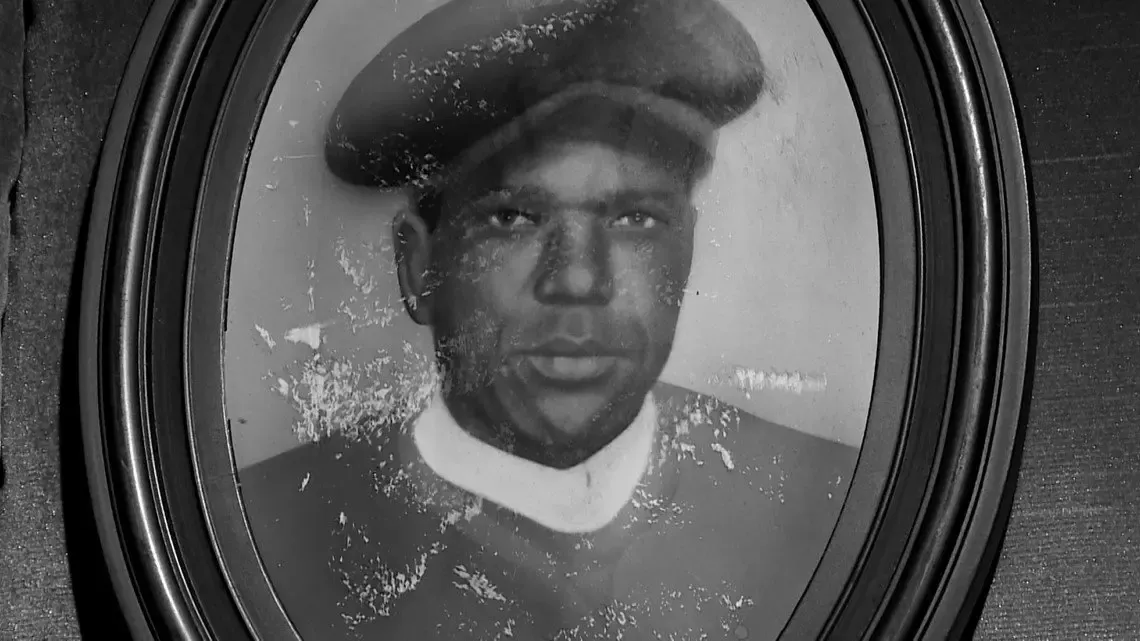
Roy Cyril Brooks was a 44-year-old father of three. He lived with his wife, Mary, and worked at the Swift Fertilizer Plant in Harvey, Louisiana, where he was a long-time and active member of his union.
Case summary
Incident
On Feb. 27, 1948 around 3:15 p.m., Roy Cyril Brooks boarded a bus in Gretna, Louisiana. He had stopped to purchase two bags of peanuts on the way to the bus, and held them in his hand. A woman in line ahead of him had paid her 5-cent fare and boarded the bus, only to realize that she intended to catch a bus on a different route. Some reports after the incident claimed the woman asked the bus driver for her fare back and he denied her, so Brooks offered her a nickel and said he’d ride under her fare instead. Some witnesses stated the woman left the bus without discussion and Brooks asked the driver if he could ride under her fare. Other passengers only heard Brooks ask the driver to make change for a quarter. All parties agreed that Brooks, who was Black, and the driver, who was white, began a heated discussion about his bus fare.
At that time, white Gretna Police Officer Alvin Bladsacker was on traffic duty at the ferry entrance nearby. He walked over and entered the bus, ordering Brooks to disembark. Bladsacker hit Brooks, possibly with a blackjack, and Brooks started bleeding from the side of his head. Bladsacker removed Brooks from the bus and marched him down the street, towards the Gretna jail.
While walking down the street, Bladsacker drew his pistol and shot Brooks twice. Some witnesses stated that Bladsacker shot Brooks as Brooks was following his commands to walk down the street. Bladsacker and the police department said that Brooks had been physically combative with Bladsacker and reached for a weapon, and that Bladsacker shot in self-defense. Brooks died in the street and no weapons were found on his person. Newspapers reported he was still holding a bag of peanuts when he died.
Aftermath
Roy Leo Brooks heard his father was shot and ran to downtown Gretna from his aunt’s house. He arrived as the coroner pronounced his father dead. A Louisiana Weekly photographer took a photo of Brooks kneeling by his father’s body. The photographer handed the first film plate off to a friend to take to the paper’s offices, and then proceeded to take more photos. Police told him to stop, confiscated and destroyed his camera, and ordered him away from the scene. An hour after Brooks’ death, Bladsacker resumed his traffic duty post.
Though some witnesses speculated that Brooks was intoxicated during the incident, the coroner’s officer chose not to test for signs of inebriation. The coroner’s report indicated Brooks died of shock and hemorrhage due to two bullet wounds of the chest.
A reported 2,000 people attended Brooks’ funeral. In the weeks after his death, the Louisiana Seafood Workers Council of the FTA-CIO, the local Louisiana NAACP branches, and the Brotherhood of Sleeping Car Porters formed a Committee for Justice in the Brooks Case. They arranged letter writing campaigns to President Harry Truman and Attorney General Tom Clark, asking the federal government to prosecute Bladsacker and see to his dismissal from the police force.
On March 11, 1948, as part of the letter writing campaign, Joseph Cadden of the Civil Rights Congress wrote a letter to Truman asking for immediate action in the Brooks case. Secretary to the President William Hassett referred the letter to Clark on March 17, 1948. Two days later, Clark responded, “I will be glad to give Mr. Cadden’s letter consideration from the standpoint of the violation of any federal law under the jurisdiction of this Department.” On March 16, 1948, Senator Glen Taylor of Idaho called for a federal investigation of Brooks’ death during a Senate session.
On April 15, 1948, Assistant Attorney General T. Vincent Quinn wrote FBI Director J. Edgar Hoover that the narrative of the incident described in the letters the president and the attorney general received differed substantially from the Gretna Police Department’s account of events. He requested an investigation of “reliable information” that would allow the Department of Justice (DOJ) to determine if the incident involved a prosecutable offense. While the FBI conducted an investigation, the Grand Jury of the District Court of the Parish of Jefferson indicted Bladsacker for manslaughter and murder. On May 21, 1948, a grand jury returned a no true bill on the murder indictment. One newspaper reported that it was the first time in Louisiana history that a white policeman was indicted for killing a Black person. The FBI delivered an investigative report on June 17, 1948.
Bladsacker’s trial for manslaughter was postponed several times. On June 27, 1949, an all-white jury acquitted Bladsacker after seven minutes of deliberation. The DOJ closed its file on Brooks’ death on Sept. 8, 1949, citing “lack of sufficient evidence establishing that the victim was shot other than in self-defense.”
Bladsacker continued working on the Gretna police force. He died on Jan. 3, 1976 at age 66.
On April 28, 2018, the Brooks family gathered with community members and representatives from the Civil Rights and Restorative Justice Project at Northeastern University School of Law for a commemorative service at Mount Pilgrim Baptist Church. At the service, Mayor Belinda Constant of Gretna read an official proclamation that formally apologized to the Brooks family. The event also included a grave dedication ceremony with a new headstone and a second line brass band.
On Nov. 9, 2019, descendants of Brooks unveiled an historical marker in Gretna near the spot where Brooks was killed at the Ferry Landing Terminal. It was the first marker honoring an African American person in the city. Brooks’ great-granddaughter, Iriane McCray, read a tribute at the ceremony.
Media Gallery
Case summaries are compiled using government records and archival primary source material. These include, but are not limited to, investigative records, arrest reports, newspaper articles, court filings, census records, birth and death certificates, transcripts, and press releases. In many cases, the records contain contradictory assertions.
In addition to the incident files associated with this case, this summary relied on the following:
Genealogical Records
- Louisiana Death Index, Louisiana, United States, 1948
- Population Schedule for Jefferson Parish, Louisiana, United States Federal Census, 1930
- Population Schedule for Orleans Parish, Louisiana, United States Federal Census, 1950
- World War II Draft Registration Cards, Louisiana, United States, 1945
News Coverage
- “Defenseless Negro Slain by Louisiana Cop,” Daily Worker (New York, NY), March 22, 1948
- “Dixie Cop Indicted for Murder of Negro,” Daily World (New York, NY), May 30, 1948
- Obituary for Alvin Bladsacker, Jefferson Parish Times (Metairie, LA), January 5, 1976
- “Officer Cleared in Homicide Case,” Times-Picayune (New Orleans, LA), June 28, 1949
- “Punishment Sought for Cop Who Killed Negro Unionist,” Daily World (New York, NY), June 13, 1948
- “Seek Punishment of Negro’s Killer,” Daily World (New York, NY), March 27, 1949
- Abner W. Berry, “‘Southern Revolt’ Means Murder of Negros,” Daily World (New York, NY), April 4, 1948
- Paul Dudley, “Gretna Family One Step Closer to Justice Decades After Police Killing of Black Man,” WWTV, April 27, 2018
- Paul Dudley, “Justice for Royal: 70 Years Later, Innocent Man Gunned Down by Gretna Police Memorialized,” WWTV, October 8, 2019
- Jesse Hardman, “70 Years Later, Memorial Held for Unarmed Black Man Fatally Shot by Police,” NPR, April 28, 2018
- Dillard Oaks, “For the First Time in Louisiana Cop is Indicted for Killing Negro,” People World (Chicago, IL), May 28, 1948
- Faimon A. Roberts III, “‘He Left a Great Legacy’: Ceremony to Commemorate Killing of Black Man in Gretna 70 Years Ago,” NOLA, April 27, 2018
- Schulyer Velasco, “72 Years Before George Floyd, This Police Killing Sparked National Protests,” Experience, November 9, 2020
- Ryan Whirty, “City of Gretna Takes Step to Right a Fatal Mistake with Historic Marker in Honor of Royal Brooks,” Louisiana Weekly (New Orleans, LA), November 18, 2019
- Ryan Whirty, “Family of Slain Black Man Gets Justice 70 Years Later,” Louisiana Weekly (New Orleans, LA), May 7, 2018