


Russell Charley
Russell Charley, a father of seven, was married to Carrie Addielee and lived in Vredenburgh, Alabama. He was 46 and worked at the Vredenburgh Lumber Company, a sawmill.
Case summary
Incident
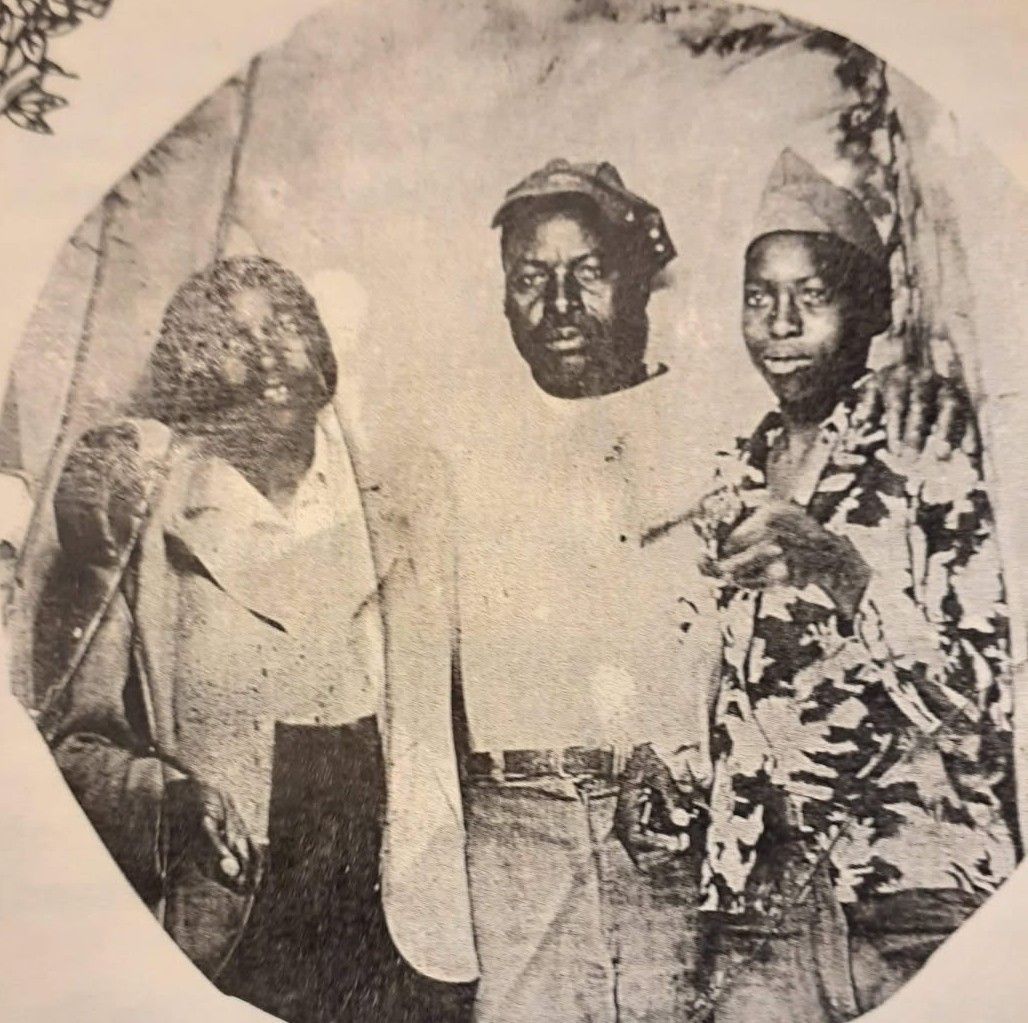
Russell Charley, 46, worked at the Vredenburgh Lumber Company saw mill in the company town of Vredenburgh, Alabama. Charley was last seen alive around 7 p.m. on May 7, 1954, by his wife, Carrie Addielee Charley. According to newspaper reports, three of Charley’s sons began searching for him the morning of May 8, when he had not returned home. They found his bullet-ridden body hanging from a tree around 7:30 a.m., and had to cut their father’s body down from the limb. His body was found near a railroad track about a mile east of Vredenburgh and near a wooded area by Pine Flat Church, a Black church.
Aftermath
According to state toxicologist Dr. Nelson Grubbs of Mobile, the cause of death was determined to be “strangulation.” Monroe County Sheriff E.E. Nicholas, however, also noted in a Monroe Journal article from May 13 that “a rubber strap cut from an automobile tire tube was found near the body.” Grubb’s postmortem examination identified “the presence of an indented abraded mark extending from behind one ear under the jaw, across the neck, up behind the other ear.” There was no mention of bullet injuries. The death certificate listed cause of death as suicide.
On May 20, Jesse P. Turpin, a prominent white resident of Peterman, Alabama, reached out to the Mobile office of the Federal Bureau of Investigation (FBI) to inform them he had received information from a farmer in the Fountain area that Charley’s death was not a suicide but a lynching. According to Turpin, on the evening of Friday, May 7, Charley was at the Vredenburgh Grocery Store. Charley was approached by a man Turpin identified as Jerry Watson, another Black sawmill worker, who offered to split a gallon of whiskey with him. Watson noted that a white man outside the store was willing to sell the whiskey for $3.00 and, if each of them pitched in $1.50, they could split the gallon. Charley left the store with Watson to go home for the money. This was the last time he was seen alive.
Turpin reported to the FBI that according to rumors, W.M. Everett, who was white, Jerry Watson, Albert Blackmon and Rev. Rintz, all of whom were Black, lynched Charley. All of the men involved, whose names were not verified by the FBI, lived at and worked in some capacity for the Vredenburgh sawmill. W. Lee Thomas, a white man listed as sheriff for the sawmill in the 1950 U.S. census, was also involved. According to Turpin, it was known that the group had “an illegal whiskey business” and Charley owed them money. Charley “was unable to meet his obligations to these people, that subjects got tired of victim’s failure to pay what he owed them, and they decided to do away with him.” Turpin was told that Charley’s body was found “dead sitting under a small bush” and the nearby rubber tube may have been used in his lynching. According to his statement, the Monroe County Sheriff’s Office demanded $6,000 from the subjects to categorize Charley’s death as a suicide.
The FBI contacted Turpin’s source, whom they noted feared for his life and asked to be kept anonymous. Referred to as “Mobile Informant T-1,” he told FBI agents that he had heard about the incident from “various colored men who worked in the Vredenburgh Saw Mill.” T-1’s account of the lynching to FBI agents differed in part from Turpin’s statement. According to T-1, Charley was involved in a love triangle with W.M. Everett, a white foreman at the sawmill, and an unnamed Black woman. Everett had previously warned Charley to “stay away,” and had attempted to kill Charley once before. Watson was used to lure Charley away on May 7. Carrie Addielee Charley, who was pregnant with their seventh child, urged him not to go with Watson, fearing he would be killed, but Charley left despite the warning.
T-1 informed the FBI agents that “all of the colored people of Vredenburgh are very much excited and upset about the death of Charley and are afraid for their own lives.” Part of their fear was caused by the alleged deal between the subjects and the Monroe County Sheriff’s Office to rule Charley’s death as a suicide in exchange for $6,000. T-1 claimed Thomas, who T-1 believed was a policeman for the sawmill and may be a policeman for the city as well, was not involved in the killing but did act as the “go-between” with the sheriff’s office. T-1 also noted “he was not well acquainted with some of the subjects and was, therefore, unable to furnish adequate descriptions.”
The Mobile FBI office provided details of the investigation to Percy C. Fountain, U.S. attorney for the Southern District of Alabama. It was Fountain’s opinion that the facts of the case did not violate federal civil rights statutes. According to the FBI report, Fountain believed that “if a lynching did occur, no law enforcement officer was involved, and, therefore, it was a matter to be handled by local authorities and not a matter over which federal authorities had jurisdiction.” Based on the information in the FBI report, Assistant Attorney General of the Criminal Division Warren Olney III agreed with Fountain’s conclusion and the Department of Justice closed the case on June 18, 1954. There does not appear to be any evidence that allegations that the Monroe County Sheriff’s Office was paid off or Thomas’ law enforcement credentials were ever investigated.
A month after the incident, Black newspapers, including the Chicago Defender, Pittsburgh Courier and the Alabama Citizen, reported that a group of Black and white men lynched Charley due to his involvement in an interracial love triangle. Articles also noted that “silence and a heavy secrecy” spread though Vredenburgh’s Black community, which made it hard to get people to comment on the incident and the lack of law enforcement response. John L. LeFlore, Mobile branch executive secretary of the National Association for the Advancement of Colored People (NAACP), called for a federal, state, and county investigation with Carrie Addielee Charley’s consent. Monroe and Wilcox County sheriffs did not respond to the demand for an investigation.
Charley was buried at Saint Matthews Cemetery in Vredenburgh. After his death, the Charley family relocated and eventually left the state. Annie Whitlock, Charley’s daughter who was five years old at the time of his death, remarked in 2019 to the Delacorte Review that her “brothers were never the same.”
Media Gallery
Case summaries are compiled using government records and archival primary source material. These include, but are not limited to, investigative records, arrest reports, newspaper articles, court filings, census records, birth and death certificates, transcripts, and press releases. In many cases, the records contain contradictory assertions.
In addition to the incident files associated with this case, this summary relied on the following:
Sources
Genealogical Records
- Death Certificate for Alabama, United States, Alabama Center for Health Statistics, 1954
- Population Schedule for Wilcox County, Alabama, United States Federal Census, 1900
- Population Schedule for Wilcox County, Alabama, United States Federal Census, 1910
- Population Schedule for Wilcox County, Alabama, United States Federal Census, 1920
- Population Schedule for Wilcox County, Alabama, United States Federal Census, 1930
- Population Schedule for Wilcox County, Alabama, United States Federal Census, 1940
- Population Schedule for Monroe County, Alabama, United States Federal Census, 1950
- Report of Investigation, Department of Toxicology, Alabama, United States, 1954
- World War II Draft Registration Cards, Alabama, 1940
Newspaper Articles
- “Campaigns Near Climax in Races in County, District,” The Monroe Journal (Clairborne, Alabama), April 29, 1954
- “County Political Battle Lines Drawn as Qualifying Deadline is Passed,” The Monroe Journal (Clairborne, Alabama), March 2, 1950
- “Hint Love Rivalry Led to Lynching,” The Chicago Defender, June 19, 1954
- “Local NAACP Officials Launch Investigation of Alleged Lynching,” The Alabama Citizen (Mobile, Alabama), June 19, 1954
- “Lynching, Fear Stun Alabamans,” New Pittsburgh Courier, June 5, 1954
- “Lynching in Alabama,” New Pittsburgh Courier, June 5, 1954
- “NAACP Probes 'Bama Lynching,” New Pittsburgh Courier, June 26, 1954
- “Suspect Lynching in Ala. Town,” The Chicago Defender, June 12, 1954
- “Two Monroe Negro Men Found Dead,” The Monroe Journal (Clairborne, Alabama), May 13, 1954
- “Two Negroes Lynched,” Daily World (New York, New York), June 27, 1954
- Merrill Bankester, “‘Never Say Die’ Characteristic of Monroe County Sawmill Town,” The Montgomery Advertiser (Montgomery, Alabama), February 16, 1967
- Rachel Hatzipanagos, “Efforts to Memorialize Lynching Victims Divide American Communities,” The Washington Post, January 29, 2024
- Selin Thomas, “A Haunting,” The Delacorte Review, Issue 2, June 24, 2019