


Dr. Thomas Brewer Sr.
Dr. Thomas Brewer Sr. was a 62-year-old physician in Columbus, Georgia. He founded the Columbus chapter of the NAACP and financially supported Primus King’s court case to ensure the Black vote in Georgia. Brewer and his wife, Lillian, had two children, Thomas Jr. and Thelma.
Case summary
Incident
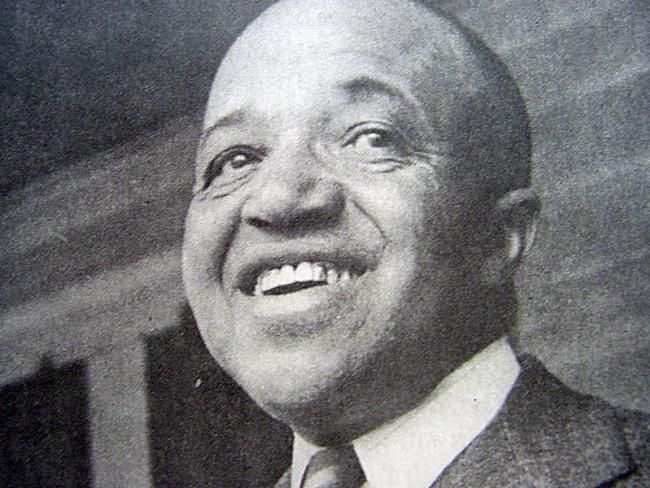
A little after 7 p.m. on Feb. 18, 1956, Dr. Thomas Brewer Sr., a Black physician, entered F&B Department Store in Columbus, Georgia. The store was owned by a 54-year-old white man named Lucio Flowers.
Newspapers reported that Brewer sought out Flowers in his office. He placed his medical bag on Flowers’ desk, and then began to speak to him about an incident of alleged police brutality during the arrest of a Black veteran outside Flowers’ store a few days earlier. He hoped Flowers would voice support for the veteran as he had witnessed the arrest. When Brewer reached in his pocket for a letter from the chief of police, Flowers shot him seven times.
In a statement to the grand jury, Flowers claimed Brewer had been harassing him to support certain political candidates, projects, and fundraising initiatives, most recently around the police brutality incident. Flowers had reported this activity to the Columbus Police Department and had requested “protection” from the police. On the afternoon of Feb. 18, Flowers said he was on the sidewalk outside his store when Brewer came to talk to him about the police brutality incident. Flowers stated that Brewer “acted like he had lost control of himself” and told Flowers he would be back to “get him” at 7. In Flowers’ telling of the evening, a police detective stopped by to check on the store and then left the building before Brewer walked into the store and approached Flowers. Flowers claims that Brewer wordlessly walked through the store, entered Flowers’ office, “kept backing away from [Flowers] toward the corner,” and then reached for a weapon. At this point, Flowers shot him “several times.”
Detective Jack Coulter gave a statement that differed from Flowers’ narrative. According to Coulter, he stopped by the store and Flowers was so upset that Coulter felt the need to distract him with questions about his inventory so that he would calm down. While they spoke about the ties Flowers had in stock, Brewer walked into the store. Brewer greeted Coulter and Coulter greeted him back. Brewer said something to Flowers that Coulter could not hear and then Flowers and Brewer walked towards Flowers’ office. As they neared the office, Coulter called to Flowers to “come here just a minute,” and turned, believing that Flowers was walking behind him towards the cash register. Instead, Coulter heard a gunshot and spun to see that Flowers had shot Brewer, who was crouched on the ground. He yelled for Flowers to stop and Flowers shot again. He yelled again for Flowers to stop and for Flowers to hand him the gun, and Flowers shot again. Finally, Flowers handed the gun over to Coulter, saying, “You can have the gun, Jack, I’m not going to cause any trouble.”
Brewer was pronounced dead on arrival at the hospital.
Aftermath
Brewer was buried in Green Acres Cemetery in Columbus and a reported crowd of over 2,500 people attended his Feb. 21 funeral. His brother told reporters that Brewer had previously received threats and that crosses were burned in his yard but that Brewer told him, “If I die it will not be in vain. I enjoy helping the people, and I enjoy the fruits of my work.”
Flowers was in poor health and was hospitalized at City Hospital in Columbus during the grand jury hearing. He gave a statement from his hospital bed to the grand jury, stating, “I shot him in defense of my life and for no other reason whatever.” He insisted that Brewer’s race and that issues of race in Columbus were not a factor in his shooting Brewer. Once released from the hospital, Flowers was held without bond in the Muscogee County Jail. The grand jury declined to indict Flowers and he was released. Newspapers printed Flowers’ statement to the grand jury after its finding.
Brewer’s widow, daughter, and son-in-law moved out of state after Brewer’s death, citing safety concerns. Some prominent Black professionals, including Brewer’s attorney and another physician chose to leave Columbus after the incident as well.
On Feb. 11, 1957, almost exactly a year after Brewer’s death, Flowers was found with a gunshot wound to the head near the ticket booth of the Dixie Theater across the street from his store. The Georgia Bureau of Investigation (GBI) investigated his death and did not identify a shooter. The GBI investigation explored but could not establish a connection between Brewer’s death and Flowers’ death.
In 1989, Columbus, Georgia declared Nov. 19, 1989 “Dr. Thomas H. Brewer Sr. Day” and unveiled a historical marker outside of his office. Brewer Elementary, a school in Columbus, holds an annual celebration every year in honor of its namesake.
Following the Department of Justice (DOJ)’s 2007 Cold Case Initiative and the 2008 Emmett Till Unsolved Civil Rights Crime Act, the FBI opened an investigation into Brewer’s death and began reviewing local investigative files. On April 6, 2009, the DOJ closed the Brewer case as it determined it was not suitable for prosecution for a number of reasons, including that Flowers was deceased.
Media Gallery
Case summaries are compiled using government records and archival primary source material. These include, but are not limited to, investigative records, arrest reports, newspaper articles, court filings, census records, birth and death certificates, transcripts, and press releases. In many cases, the records contain contradictory assertions.
In addition to the incident files associated with this case, this summary relied on the following:
Genealogical Records
- Georgia Death Index, Georgia, United States, 1956
- Population Schedule for Davidson County, Tennessee, United States Federal Census, 1920
- Population Schedule for Muscogee County, Georgia, United States Federal Census, 1940, 1950
- Population Schedule for Pike County, Alabama, United States Federal Census, 1900, 1910
- Social Security Administration, Social Security Applications and Claims Index, 1936-2007, Alabama, United States, 1983
Newspaper Articles
- “Columbus Merchant Says Negro Threatened Him Before Shooting,” Atlanta Constitution, February 20, 1956
- “Dr. Brewer, Georgia NAACP Leader, Slain,” Daily Worker (New York City, NY), February 20, 1956
- “Dr. Brewer Told Brother: ‘If I Die, It Will Not Be in Vain,’” Daily Worker (New York City, NY), February 21, 1956
- “Dr. Brewer’s Accused Killer Freed by Jury,” Daily World (Atlanta, GA), March 1, 1956
- “Dr. Brewer’s Slayer Charged with Murder,” Daily Worker (New York City, NY), February 22, 1956
- “Flowers Goes Free in Brewer Killing,” Pittsburgh Courier (Pittsburgh, PA), March 10, 1956
- “Flowers is Charged in Brewer Murder,” Columbus Ledger (Columbus, GA), February 20, 1956
- “GA Denies Bias Issue in Slaying,” New York Herald (New York City, NY), February 20, 1956
- “Georgians Bitter Against US,” Pittsburgh Courier (Pittsburgh, PA), February 25, 1956
- “Jury Refuses Indictment in Negro Slaying,” Washington Post and Times Herald (Washington, DC), March 1, 1956
- “Land Releases Testimony of Grand Jury Witnesses,” Columbus Ledger (Columbus, GA), March 1, 1956
- “Merchant Held in Race Slaying,” Washington Star (Washington, DC), February 20, 1956
- “Murder of Negro Leader Charged,” Washington Post and Times Herald (Washington, DC), February 22, 1956
- “Negro Leader Slain in Georgia Dispute,” New York Times, February 19, 1956
- “Negro Physician Slain, Georgia Merchant Held,” Washington Star (Washington, DC), February 19, 1956
- “Noted GA Lawyer in Brewer Case,” Pittsburgh Courier (Pittsburgh, PA), March 3, 1956
- “Physician Slain in GA Store,” Baltimore Afro-American (Baltimore, MD), February 21, 1956
- “Slain Negro Doctor Accused of Threat,” New York Times, February 20, 1956
- “Store Owner Free in Georgia Killing,” Washington Star (Washington, DC), March 1, 1956
- Brad Barnes, “Back on the Trail,” Columbus Ledger (Columbus, GA), May 19, 2002
- Leslie Hudgins, “Brewer Elementary School Celebrates the Life of Dr. Thomas Brewer,” WRBL, November 16, 2023
- Robert M. Ratcliffe, “Dr. Brewer Died Like He Lived…a Fighter,” Pittsburgh Courier (Pittsburgh, PA), February 25, 1956
- Luke Teasley, “Flowers Under Guard at Cobb; Threat is Cited in Slaying,” Columbus Enquirer (Columbus, GA), February 20, 1956
- Roger Williams, “Brewer’s Kin Sees No Link Between His Death, NAACP,” Columbus Enquirer (Columbus, GA), February 20, 1956