


Maceo Snipes
Maceo Snipes was a 37-year-old farmer in Taylor County, Georgia. He was a World War II veteran who received an Asiatic Pacific Service Medal.
Case summary
Incident
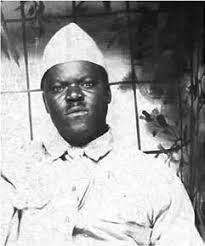
On July 17, 1946, Snipes cast a ballot as the first Black voter in a Democratic primary in Taylor County, Georgia. According to an August 1948 St. Louis Globe-Democrat article, white residents of Taylor County had been intimidating would-be Black voters in the days leading up to the election, threatening to kill any Black person who exercised their right to vote. The Snipes family told reporters that Klan members threatened Snipes ahead of the election. The St. Louis Globe-Democrat reported that Snipes told a friend that the white people on the Election Board appeared “dazed” as he cast his ballot and that “it was like they thought a dead man was voting.”
The next day, on July 18, three or four white men drove to the Snipes home and called for Maceo Snipes to come speak with them. Snipes was eating dinner with his mother, Lula Snipes, and his aunt, Carrie Terry. He left the table and went out to meet them.
Snipes later told family members that 32-year-old Edward Williamson, also known as Edward “Edmund” Cooper, and 22-year-old Linwood Harvey were two of the men in the car. According to August 1946 statements Williamson and Harvey gave to FBI agents, Snipes owed Williamson ten dollars and Williamson had come to collect his debt. Williamson later testified to a coroner’s jury that Harvey had offered to pay Snipes’ debt to Williamson in exchange for Snipes working in Harvey’s sawmill.
Both Williamson and Harvey told an FBI agent that Snipes told Williamson he was not going to work at Harvey’s sawmill and Williamson responded “Old Negro, you’re talking to a white man” and then opened the car door. Williamson claimed Snipes then reached in his pocket, pulled out a knife, and stepped towards Williamson. However, Harvey told the FBI that Snipes took two steps back from Williamson after Williamson got out of the car, and then reached into his pocket for a knife. Williamson and Harvey both claim that in the ensuing argument, Snipes drew a knife and Williamson then took a gun from the car’s glove compartment and fired two shots at Snipes.
Lula Snipes told a FBI special agent that she could not hear the conversation the men had by the car but she heard three gunshots, two right in a row and a third a few seconds later. She went to look outside, but by the time she got to a window, the vehicle was leaving their property. Snipes walked up to the house and told his mother he had been shot by Edmund Cooper (a.k.a Williamson). Terry’s statement to the FBI aligned with Lula Snipes’ and she added that Snipes did not have a knife in his hand when he walked into the house.
Aftermath
Lula and Maceo Snipes walked three miles to get a ride to Montgomery Hospital in Butler, Georgia, where Snipes sat for six hours waiting for a doctor.
Snipes died on July 20, two days after being shot. His family owned a burial plot in a Black cemetery in Rupert. The St. Louis Globe-Democrat reported that white people gathered at Snipes’ funeral and threatened his family and the undertaker, refusing to let them bury Snipes with his family. The undertaker took Snipes’ body to a different area and buried him. Snipes’ surviving family members still do not know where he was buried, telling reporters as recently as 2009 that they would like to know where he was laid to rest.
In the days that followed his death, Snipes’ family received repeated threats by white residents and were told they should leave town if they wanted to stay alive. Snipes’ great-niece, Raynita Snipes Johnson, said in a 2020 radio interview that someone left a note on the door of the church the Snipes family attended, declaring that Snipes would not vote again and “anyone who preaches about Maceo Snipes better dig a grave for themselves.” His family sold their farmland. Some family members moved to Ohio, leaving under cover of night with their children hidden under canvas tarps. One of Snipes’ cousins later told the family that he did not vote until 1954 because Snipes’ killing and its aftermath were so terrifying.
On July 22, Williamson, who newspapers reported was from a prominent and powerful family in the area, was brought before a coroner’s jury in Taylor County. The jury found that Williamson fired at Snipes in self-defense. On July 26, FBI Director J. Edgar Hoover sent the Department of Justice (DOJ) information about the case and stated that the FBI was not taking any action unless advised to do so by the DOJ.
On Aug. 6, the DOJ directed the FBI to open an investigation to determine if there was evidence that Snipes was killed because of his participation in the Georgia primary election, which would warrant federal prosecution. It directed the FBI to interrogate Williamson’s claim of self-defense and determine if Snipes had a knife, if his mother overheard the alleged argument, and if there were any other witnesses besides Harvey.
The FBI interviewed Harvey, Williamson, Snipes’ mother, and his aunt. After reviewing the FBI’s report on the incident, the DOJ decided that the shooting “arose out of personal differences unrelated to the act of voting,” and closed the case in September of 1946.
Edward Williamson died on Oct. 29, 1985. Lynwood Harvey died on March 20, 2003.
On July 21, 2007, Snipes’ surviving family gathered at the Church of God in Christ in Butler, Georgia to hold a military burial for Snipes. Though they still do not know the location of his grave, they held the service to honor him and the funeral his family was not able to hold in 1946. Sixty-one years after his death, soldiers from Fort Benning gave a 21-gun salute, played taps, and presented the family with a U.S. flag in honor of Snipes’ service.
On July 25, 2007, the FBI identified the Snipes case as one with “investigative interest that may provide closure to the case without prosecutive action” as part of its review of Georgia homicides for its Civil Rights Program Cold Case Initiative. As the two known subjects were deceased and the FBI did not secure leads on any other potential perpetrators in the vehicle, the re-investigation was closed on April 12, 2010.
Media Gallery
Case summaries are compiled using government records and archival primary source material. These include, but are not limited to, investigative records, arrest reports, newspaper articles, court filings, census records, birth and death certificates, transcripts, and press releases. In many cases, the records contain contradictory assertions.
In addition to the incident files associated with this case, this summary relied on the following:
Genealogical Records
- Population Schedule for Mahoning County, Georgia, United States Federal Census, 1950
- Population Schedule for Taylor County, Georgia, United States Federal Census, 1910, 1920, 1930, 1940
- World War II Draft Registration Cards, Georgia, 1943
News Coverage
- “Maceo Snipes Receives Proper Burial 61 Years Later,” WTVM, July 22, 2007
- “Miami Valley StoryCorps: Linda Burrs and Damien Burrs,” WYSO, March 16, 2011
- “Murdered Soldier Honored 61 Years After His Death,” WTVM, May 28, 2007
- “‘The Black Vote Matters’: How An Army Veteran Inspired A Teenage Martin Luther King, Jr.,” StoryCorps, January 14, 2022
- Dan Barry, “Killing and Segregated Plaque Divide Town,” New York Times, March 18, 2007
- Rosalind Bentley, “At 17, MLK Wrote to Decry Lynchings,” Atlanta Journal-Constitution, January 15, 2018
- Elliott Minor, “Request for Investigation of 1946 Killing in Taylor County Breaks Down in Rancor,” Macon Telegraph (Macon, GA), February 14, 2007
- Art Shields, “Bare New Georgia Lynch-Murder,” Daily Worker (Chicago, IL), July 30, 1946
- Kaffie Sledge, “Funeral Set for 1946 Murder Victim,” Ledger-Enquirer (Columbus, GA), July 20, 2007
- Ray Springle, “Negro War Hero Slain for Daring to Vote,” St. Louis Globe-Democrat (St. Louis, MO), August 14, 1948
- Bill Torpy, “Segregated War Tribute Opens Racial Wounds in Taylor County,” Atlanta Journal-Constitution, November 12, 2006