


Marion King
Marion King was a native of Valdosta, Georgia and mother of three at the time of the incident. A Spelman College graduate, she was married to Slater King, a founder of the Albany Movement. They lived in Albany, Georgia.
Case summary
Incident
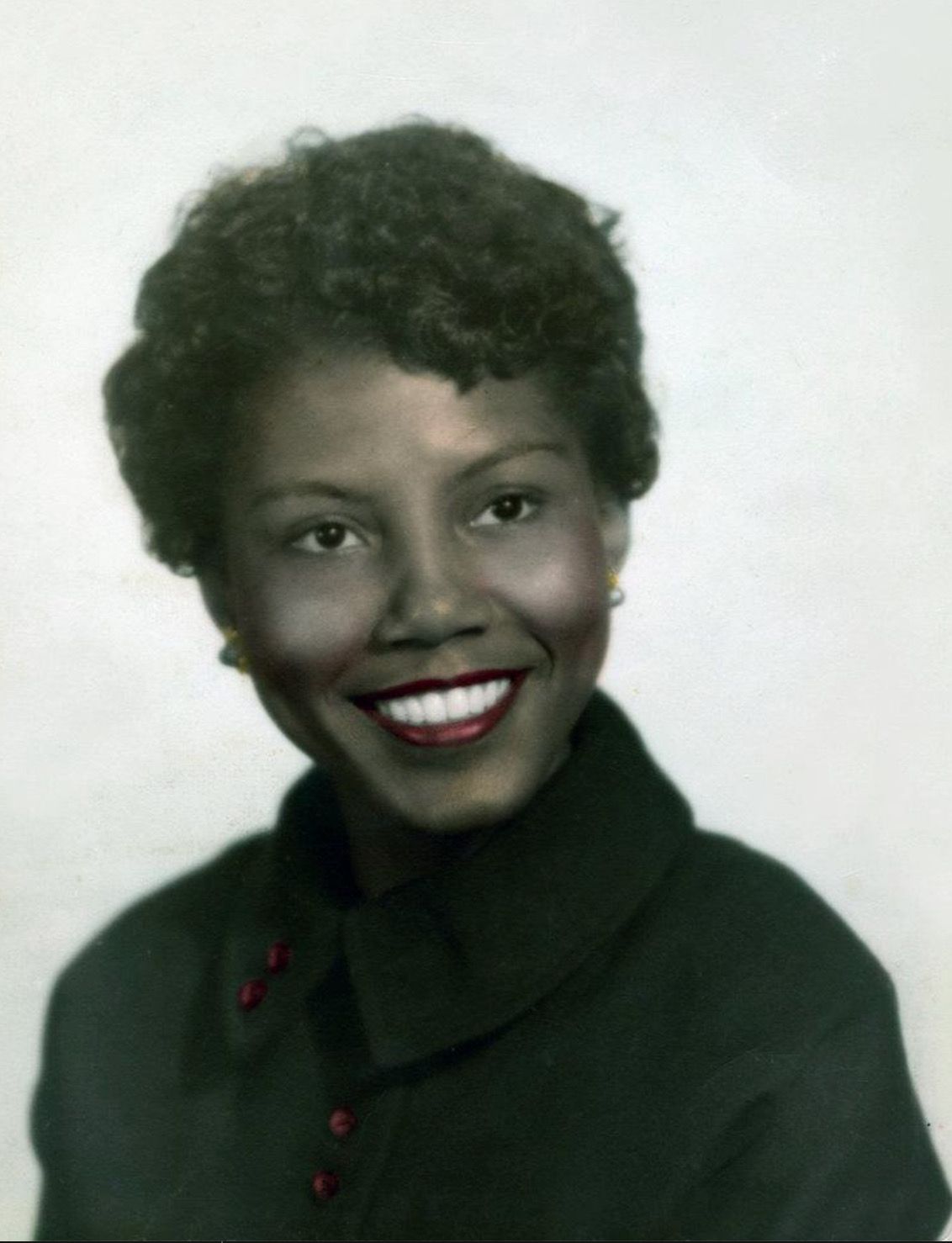
In the summer of 1962, the Albany Movement – a civil rights campaign for desegregation in Albany, Georgia – was gaining national attention. On July 10, the Rev. Martin Luther King Jr. and the Rev. Reverend Ralph Abernathy, president and vice president, respectively, of the Southern Christian Leadership Conference, were jailed for several days for their role in demonstrations in the area. On July 21, local police arrested and jailed several dozen Black children in “racial disputes,” according to federal records. Two days later, at around 5 p.m., 29-year-old Marion King arrived at the Mitchell County Jail in Camilla, about 28 miles south of Albany. Marion King was active in the Albany Movement, which had been co-founded by her husband, Slater King. Joining Marion King that day were approximately 30 other community members who had come to drop off food and clean clothes for the children, one of whom was the daughter of the King family’s housekeeper. Marion King, who was five and a half months pregnant, also brought along her three children – aged 1, 3 and 5.
Outside the courthouse, which was next to the jail, a crowd of approximately 100 white people gathered, some of them armed. Mitchell County Sheriff John Maples recalled later that the situation was “getting too hot.” On Maples’ orders, Deputy Sheriff Walter L. Williford, an officer within the jail gates, told the group of Black people that they needed to leave the area. King moved slower than the rest of the crowd; in addition to being pregnant, she was carrying her 3-year-old daughter. According to King, a second officer, later identified as Maples, approached and told her to obey Williford and hurry up.
In a subsequent interview with the Federal Bureau of Investigation (FBI), King said that “The first officer shoved me from the rear, about my shoulders. I did not fall.” The officers then threatened to arrest King, who said that the “second officer [then] kicked me with his foot, striking me in the buttocks. I did not fall.” Someone in the crowd yelled to the officers not to hit King as she was pregnant. At that point, King told the FBI, “The first officer was in front of me and hit me on the right side of my head. I dropped my child and fell to the ground on gravel.” King said she blacked out briefly after she was struck but she did not believe her child was hurt. Two women helped her to her car.
Several Black witnesses in the crowd corroborated King’s account. Maples and Williford gave oral statements to the FBI that differed from King’s signed statement. They said that they asked the group of Black people to leave the premises and that King refused, saying, “I’m not afraid of any white son of a bitch.” Williford said he told her that she would be “in trouble” if she did not leave. When she still refused, he grabbed her by the arm and made her walk toward the parking lot. As she began to curse, Maples joined them and grasped her other arm. In her efforts to wrench herself free, King fell to the ground, the officers said. Though both officers remembered King holding a child, they stated the child did not fall to the ground. Two white witnesses – owners of a nearby gas station – corroborated the two officers’ accounts.
Aftermath
Dr. Jacob L. Shirley Jr. treated King’s injuries in her home. He found abrasions on her right knee and right elbow and a contusion on the right side of her face, accompanied by swelling. Shirley checked the fetus’ heartbeat and reported that it was still normal.
At a meeting of the Albany Movement that evening, Abernathy informed attendees what had occurred. Slater King told the crowd that the “damnable federal government has turned their back on us,” according to FBI documents. At 6:50 p.m., Martin Luther King Jr. called the FBI Atlanta office and registered a complaint about the treatment of Marion King at the Mitchell County Jail. Martin Luther King Jr. also made public remarks about the incident, saying, “It’s a terrible thing when a policeman hits a pregnant woman – a pregnant woman with a child in her arms!”
Later that same evening, two FBI agents went to the King home, where they obtained a signed statement from King with her account of the incident.
On July 31, 1962, Attorney General Robert F. Kennedy requested an update on the King investigation. On Aug. 1, 1962, the FBI sent the Department of Justice (DOJ) its preliminary investigation report on the King incident, and roughly two months later, on Oct. 5, 1962, the DOJ advised Floyd Buford, U.S. Attorney for the Middle District of Georgia, that it was closing the King case, as “evidence is insufficient to sustain a prosecution under the Civil Rights Statute.”
In November, Marion King delivered a stillborn child. In a Dec. 26 letter to President John F. Kennedy, Slater King wrote that “our physician, Dr. J.L. Shirley Jr., stated that he felt that the brutal attack was the major cause of the baby not living.” In the decades since, Marion and Slater King’s children have asked the city of Camilla for an apology for the treatment of their mother and unborn sibling. They have yet to receive a response, according to newspaper accounts.
Maples, the Mitchell County sheriff, died on Aug. 3, 1964 at 54. Williford, his deputy, continued to draw scrutiny for violence against Black residents of the area. In 1964, he shot Pierce Watts, a Black man who was trying to obtain a marriage license at the Mitchell County Courthouse. Williford claimed Watts had jumped him. On Jan. 25, 1971, Williford shot and killed Harrison Mobley Jr., a 31-year-old Black man. Williford was attempting to arrest Mobley for allegedly killing a woman in Mitchell County. Fulton County Medical Examiner Joseph L. Burton noted significant discrepancies between Williford’s account of the killing and the evidence from the case. Burton’s report led to a Justice Department probe of the case, though Williford was never indicted. In 1975, Williford, then Mitchell County sheriff, was expelled from the Georgia Sheriffs’ Association following an arrest for public drunkenness, public indecency, using abuse and profane language, and simple battery on an officer while attending a law enforcement workshop in Atlanta. In 1982, Williford was sentenced to five years probation on federal mail fraud charges and resigned as sheriff as part of his plea bargain. He died on May 8, 1991, at age 63.
King’s case continued to animate civil rights organizers. During his speech at the March on Washington, on Aug. 28, 1963, John Lewis said “What did the federal government do when local police officials kicked and assaulted the pregnant wife of Slater King, and she lost her baby?” Marion King went on to attend Mercer University Law School and became an assistant attorney for the city of Atlanta, serving in the Maynard Jackson and Andrew Young mayoral administrations. She died on May 22, 2007, during heart surgery at Piedmont Hospital in Atlanta. She was 74. King is buried in Hillandale Memorial Gardens in Lithonia, Georgia.
There is no public record of Marion King discussing details about the child she lost in 1962, nor have recollections of private conversations emerged in reported interviews with her family. Jonathan King, the oldest child of Marion and Slater King, recalls that his parents never spoke of the loss of his sibling. But on Jan. 2, 2026, he obtained a copy of his sibling’s birth certificate from the Georgia Department of Public Health’s vital records office. For the first time, he learned that the child had been a girl.
Media Gallery
Case summaries are compiled using government records and archival primary source material. These include, but are not limited to, investigative records, arrest reports, newspaper articles, court filings, census records, birth and death certificates, transcripts, and press releases. In many cases, the records contain contradictory assertions.
In addition to the incident files associated with this case, this summary relied on the following:
Sources
Genealogical Records
- Population Schedule for Valdosta City, Georgia, United States Federal Census, 1940
Newspaper Articles and other Media Coverage
- “2 Ga Police Beat Pregnant Mother,” Washington Afro-American (Washington, DC), July 28, 1962
- “Negro for Mayor in Albany, Georgia,” Detroit Tribune, September 28, 1963
- “Negro Shot in Fracas,” Atlanta Journal, July 8, 1964
- “Negroes Defy US Court Ban; 7 Marchers Seized at Albany,” Atlanta Constitution, July 24, 1962
- “Negroes Seek Injunction for Paraders,” News Tribune (Tacoma, WA), July 24, 1962
- “Report Hits History of Mitchell Killing,” Atlanta Journal, July 21, 1975
- “Sheriffs Expel Sheriff Williford,” Atlanta Constitution, February 15, 1975
- “Sheriffs in Trouble from All Parts of Georgia,” Columbus Ledger (Columbus, GA), March 23, 1985
- Sam Adams, “Past, Present Conflict in Albany,” Tampa Bay Times, August 2, 1962
- Amanda Andrews, “Children of Civil Rights Activist Seek Justice Decades Later,” Georgia Public Broadcasting, September 15, 2021
- Tony Cooper, “Postell Feels GBI, DOR are ‘After Him,’” Atlanta Journal, September 1, 1980
- Andy Fillmore, “Georgia Police Attacked His Pregnant Mom, Marion King, in 1962. Now an Ocala Doctor Wants an Apology,” Ocala Star Banner (Ocala, FL), September 30, 2021
- Lucille Lannigan, “Albany’s King Family Seeks Apology for 1962 Police Attack on Marion King,” Albany Herald (Albany, GA), October 24, 2023
- Jeffry Scott, “Marion Jackson Obituary,” Atlanta Journal-Constitution, May 24, 2007